


Dentures & partial dentures in Boise, ID
Full and partial dentures crafted for comfort, fit, and a natural smile. Traditional dentures, implant-supported dentures, and same-day immediate dentures available.
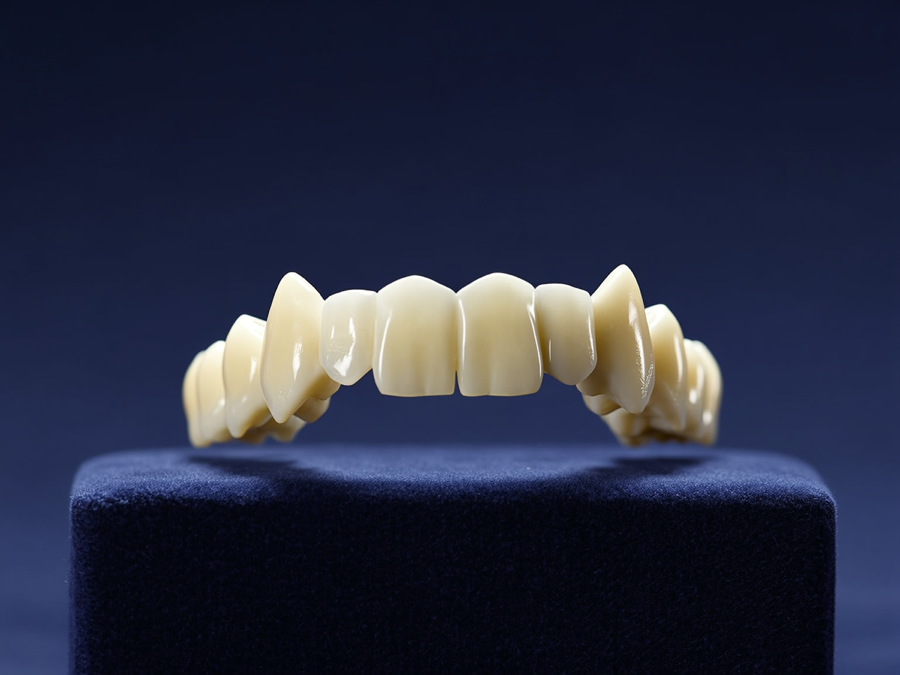
Why choose us for dentures
Custom fit
Every denture we create is custom-fabricated from precise impressions of your mouth. The base is contoured to fit your gums and palate exactly, and the teeth are positioned to support your facial structure and restore a natural bite. No two dentures are alike because no two mouths are alike.
Natural appearance
Modern denture teeth are made from high-quality acrylic or porcelain that mimics the shape, shade, and translucency of natural teeth. We select tooth size, color, and arrangement that complement your facial features and skin tone so your dentures look like a natural smile, not like dentures.
Implant-supported option
For patients who want maximum stability, we offer implant-supported dentures that snap onto two to four dental implants. This eliminates slipping, eliminates adhesive, and dramatically improves chewing ability compared to conventional dentures. You get the security of a fixed restoration with the convenience of a removable appliance.
Same-day immediate dentures
If you need teeth extracted, you do not have to go without teeth during the healing period. We offer immediate dentures that are fabricated in advance and placed the same day as your extractions. You leave our office with a complete smile while your gums heal and your permanent dentures are being made.
Types of dentures we offer
Full dentures
Full dentures replace an entire arch of missing teeth, upper, lower, or both. The acrylic base sits directly on the gum tissue and is held in place by suction and the natural contours of your mouth. Upper dentures include a palate plate for added retention, while lower dentures rely on the ridge of bone along the jaw. Full dentures restore your ability to eat, speak, and smile with confidence after complete tooth loss.
Best for: patients who have lost all teeth in one or both arches, or who need all remaining teeth extracted due to advanced decay or gum disease.
Partial dentures
Partial dentures replace one or more missing teeth while preserving the healthy natural teeth that remain. A metal or flexible nylon framework attaches to your existing teeth with discreet clasps, and the replacement teeth fill in the gaps. Partials prevent your remaining teeth from shifting into the empty spaces and distribute chewing forces more evenly across your mouth.
Best for: patients missing several teeth but who still have healthy natural teeth remaining that can support the partial framework.
Implant-supported dentures
Implant-supported dentures combine the convenience of a removable denture with the stability of dental implants. Two to four titanium implants are placed in the jawbone, and the denture snaps securely onto the implants with special attachments. This eliminates the slipping, rocking, and adhesive problems that conventional denture wearers often experience. You remove the denture for cleaning but it stays firmly locked in place during eating and speaking.
Best for: current denture wearers frustrated with loose or uncomfortable dentures, or patients who want a more stable alternative to conventional full dentures.
What to expect, the denture process
Consultation and treatment planning
We examine your mouth, take digital X-rays, and discuss your goals and lifestyle. Based on the number and condition of your remaining teeth, we recommend the type of denture that will give you the best combination of function, appearance, and comfort. We also discuss whether implant-supported options would benefit you. A detailed cost estimate is provided at this visit.
Impressions and bite registration
We take precise impressions of your gums and any remaining teeth to create an exact model of your mouth. Bite registration records how your upper and lower jaws relate to each other so the lab can position the denture teeth for a natural, comfortable bite. If extractions are needed, they may be performed at this stage or at a separate appointment depending on the treatment plan.
Try-in appointment
Before the final denture is completed, you try on a wax model with the teeth set in position. This is your opportunity to evaluate the appearance, tooth shade, tooth arrangement, and overall fit. We can make adjustments to the tooth position, size, or color at this stage before the denture is finalized. Many patients bring a family member to this appointment for a second opinion on the look.
Delivery
The finished denture is placed and checked for fit, bite, and appearance. We make any necessary adjustments right in the office. You receive detailed instructions on how to insert, remove, and clean your new denture, as well as what to expect during the adjustment period.
Follow-up adjustments
It is normal for new dentures to need minor adjustments as your gums settle. We schedule follow-up visits during the first few weeks to check for sore spots, refine the fit, and make sure you are adapting comfortably. These adjustment visits are included in the cost of your denture. Over the first year, we monitor the fit as your gum tissue remodels after any extractions.
Frequently asked questions
How long does it take to adjust to new dentures?
Most patients need two to four weeks to adjust to wearing new dentures. During the first week, your mouth is learning to work with the new appliance, you may produce extra saliva, feel some soreness on your gums, and notice changes in how certain words sound. These issues resolve quickly as the muscles in your mouth adapt. Eating soft foods during the first week and gradually reintroducing firmer foods helps ease the transition. Follow-up adjustment appointments address any sore spots.
Can I eat normally with dentures?
After the initial adjustment period, most denture wearers can eat a wide variety of foods comfortably. Start with soft foods cut into small pieces and chew on both sides of your mouth simultaneously to distribute the forces evenly. As you gain confidence, you can gradually add firmer foods. Very hard or sticky foods like caramel, whole nuts, and corn on the cob may always require some caution. Implant-supported dentures significantly improve chewing ability and allow you to eat foods that would be difficult with conventional dentures.
How long do dentures last?
With proper care, a well-made denture typically lasts 5 to 10 years before it needs to be replaced. The denture teeth wear down gradually over time, and the fit changes as your jawbone naturally remodels after tooth loss. Relining the denture every two to three years helps maintain a good fit during its lifespan. Implant-supported dentures tend to last longer because the implants help preserve the jawbone and reduce the rate of bone resorption that causes conventional dentures to loosen over time.
What is the difference between implant-supported and traditional dentures?
Traditional dentures rest on your gums and are held in place by suction and adhesive. Implant-supported dentures snap onto two to four titanium implants that are surgically placed in your jawbone. The key differences are stability (implant dentures do not slip or rock), chewing force (implant dentures restore up to 70 percent of natural chewing ability compared to 20 to 25 percent for conventional dentures), bone preservation (implants stimulate the jawbone and prevent the bone loss that makes conventional dentures loose over time), and comfort (no adhesive needed and no palate plate required for upper dentures).
How much do dentures cost?
At our Boise office, full dentures typically range from $1,500 to $3,500 per arch depending on the materials and type selected. Partial dentures range from $1,200 to $3,000. Implant-supported dentures cost more due to the surgical component, typically $5,000 to $15,000 per arch depending on the number of implants. Most dental insurance plans cover a portion of denture costs. We verify your benefits before treatment and offer CareCredit financing and our in-house membership plan for uninsured patients.
Patient Resources for Dentures
Removable prosthodontics, complete dentures, partial dentures, and implant-supported overdentures, are governed by specialty guidelines and decades of materials research. The organizations below publish patient-facing material on options and adaptation.
- American College of Prosthodontists, the specialty body for removable and fixed prosthodontics, with patient guides on denture types and adjustment
- American Dental Association, Dentures, ADA’s evidence-based patient guide to complete and partial dentures
- American Academy of Implant Dentistry, guidance on implant-retained and implant-supported overdentures, often a longevity upgrade over conventional dentures
- NIH NIDCR, Tooth Loss, federal research on edentulism rates, prosthetic outcomes, and oral-systemic effects
- Ivoclar Vivadent, manufacturer of denture teeth and acrylic systems (IvoBase, SR Phonares) used in modern denture fabrication
Ready to restore your smile with comfortable, natural-looking dentures?
Insurance and Payment for Dentures
Dentures and partial dentures are classified as major procedures, typically covered at 50 percent after your deductible. Some plans have waiting periods of 6 to 12 months for major services.
We accept Delta Dental, Blue Cross of Idaho, Cigna, Aetna, and 10+ other carriers. No insurance? Our in-house savings plan saves you 20–40% on every procedure. Learn about all financing and payment options.