


Porcelain crowns & bridges in Boise, ID
Custom porcelain crowns and bridges that restore damaged or missing teeth with natural-looking results. Same-shade color matching, precise digital impressions, and durable materials built to last.
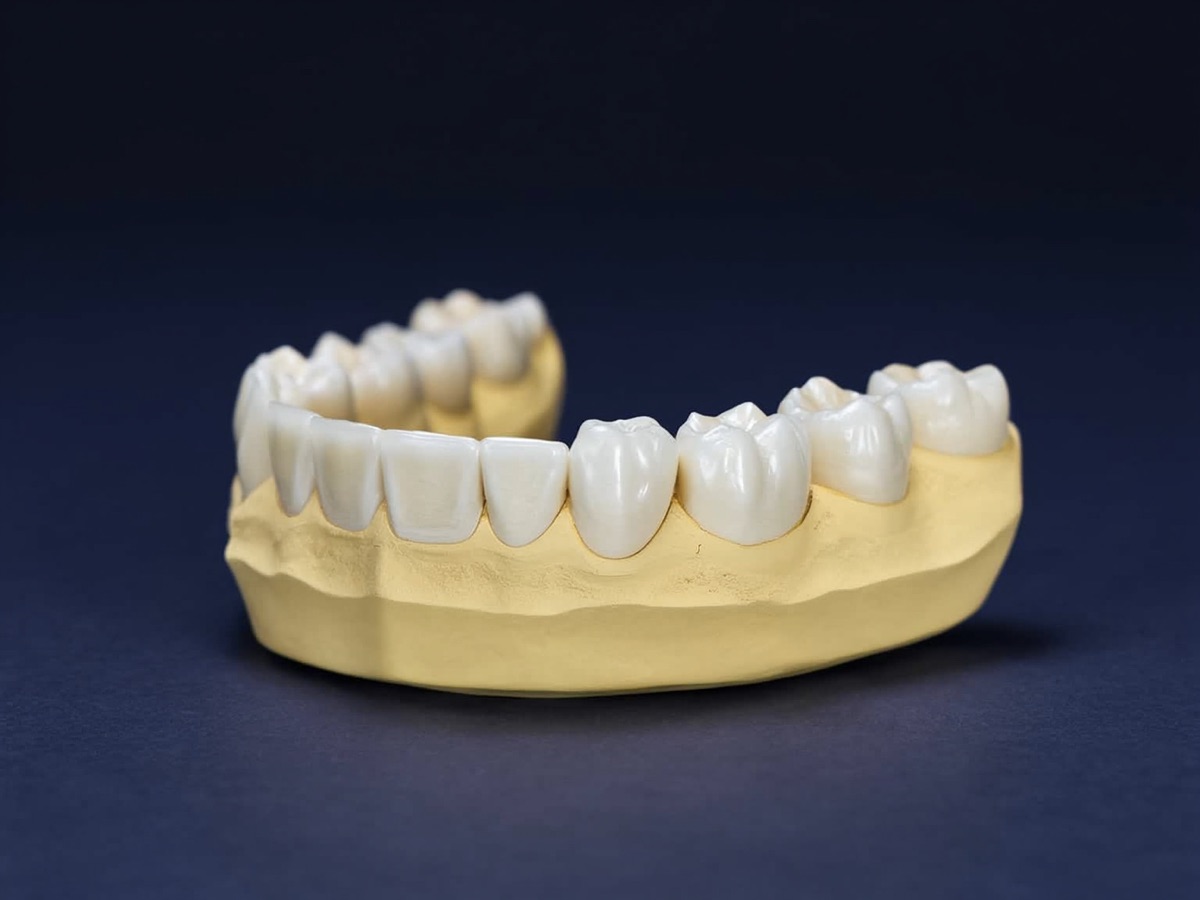
Why choose us for crowns and bridges
Natural appearance
Every crown and bridge is custom-shaded to match your surrounding teeth using advanced color-matching technology. The layered porcelain replicates the translucency and depth of natural enamel so your restoration blends seamlessly into your smile.
Digital impressions, no goopy molds
We use an intraoral digital scanner to capture precise 3D images of your teeth in minutes. No messy impression trays, no gagging, and no waiting for molds to set. The digital scan produces a more accurate fit than traditional putty impressions.
Same-day temporaries
You never leave our office with an unprotected tooth. We fabricate and place a custom temporary crown the same day your tooth is prepared, so you can eat, speak, and smile comfortably while your permanent restoration is being crafted in the lab.
10–15 year durability
Modern porcelain crowns and bridges are engineered to withstand years of daily biting and chewing forces. With proper oral hygiene and regular dental visits, most restorations last 10 to 15 years, and many patients keep theirs even longer.
Crowns vs. bridges, when each is used
A dental crown and a dental bridge solve different problems, though they are often discussed together because they use the same porcelain materials and similar fabrication techniques. Understanding the difference helps you know what to expect when your dentist recommends one over the other.
A crown is a single restoration that covers and protects one damaged tooth. It fits over the entire visible portion of the tooth like a cap, restoring its shape, size, strength, and appearance. Crowns are recommended when a tooth has a large cavity that a filling cannot adequately support, after root canal therapy to protect the weakened tooth, when a tooth is cracked or fractured, or when an older large filling is failing and the remaining tooth structure needs reinforcement. The tooth must still be present in the jaw, a crown restores a damaged tooth, it does not replace a missing one.
A bridge replaces one or more missing teeth by anchoring artificial teeth to the natural teeth on either side of the gap. The anchor teeth (called abutments) receive crowns, and the replacement tooth (called a pontic) is fused between them, literally bridging the space. Bridges are recommended when one to three adjacent teeth are missing, the teeth on either side of the gap are healthy enough to support the bridge, and the patient prefers a fixed restoration that does not require surgery.
In some cases, a dental implant may be a better long-term option than a bridge because it does not require altering the adjacent teeth. We discuss all available options during your consultation so you can make an informed decision based on your specific situation, goals, and budget.
The crown and bridge procedure
Evaluation and digital scan
We examine the damaged or missing tooth area, take digital X-rays to assess the root and bone structure, and discuss your treatment options. If a crown or bridge is the right choice, we use our intraoral scanner to capture a precise 3D digital impression of your teeth. This scan is sent directly to our dental laboratory for fabrication.
Tooth preparation and temporary crown
Under local anesthesia, your dentist reshapes the tooth (or abutment teeth for a bridge) to create room for the porcelain restoration. We remove a thin layer of enamel from all surfaces so the crown fits precisely over the tooth without adding bulk. A custom temporary crown is placed immediately to protect the prepared tooth while the permanent restoration is being made.
Lab fabrication
Our partnered dental laboratory uses your digital scan to craft a porcelain crown or bridge that matches the exact contours, shade, and translucency of your natural teeth. Skilled ceramists layer the porcelain to replicate the way natural enamel reflects light. Fabrication typically takes 10 to 14 business days.
Permanent placement
At your second appointment, we remove the temporary and try in the permanent crown or bridge. You check the color, shape, and bite before we cement it in place. We make any final adjustments to ensure the restoration feels natural and your bite is balanced. Once bonded, the crown or bridge becomes a permanent part of your smile.
Cost and financing
$1,000 – $1,500 per crown • $2,500 – $4,500 per bridge
The cost of a porcelain crown at our Boise office typically ranges from $1,000 to $1,500 depending on the tooth location and complexity. A three-unit bridge (replacing one missing tooth with crowns on the two adjacent teeth) generally costs $2,500 to $4,500. Factors that affect pricing include whether the tooth needs a core buildup, the type of porcelain used, and the location in the mouth.
Most dental insurance plans classify crowns and bridges as major restorative procedures and cover 50 to 80 percent of the cost after the deductible. We verify your benefits before treatment so you know your exact out-of-pocket cost in advance. For uninsured patients, we accept our in-house membership plan and offer CareCredit financing with monthly payment options.
Frequently asked questions
How long do porcelain crowns and bridges last?
With proper oral hygiene and regular dental checkups, porcelain crowns typically last 10 to 15 years, and many patients keep theirs for 20 years or more. Bridges have a similar lifespan. The most important factors in longevity are maintaining good brushing and flossing habits, avoiding using your teeth to open packages or chew ice, and keeping up with your regular dental visits so we can monitor the restoration and catch any issues early.
Does getting a crown hurt?
The tooth preparation is done under local anesthesia, so you should not feel pain during the procedure. Most patients compare the experience to getting a filling. You may notice mild sensitivity around the prepared tooth for a few days after the appointment, which is normal and typically resolves on its own. Over-the-counter pain medication like ibuprofen handles any post-procedure discomfort easily. For patients with dental anxiety, we offer nitrous oxide sedation to help you relax.
When do I need a crown instead of a filling?
A filling works well for small to moderate cavities where most of the tooth structure is still intact. A crown becomes necessary when the cavity is too large for a filling to reliably support, when the tooth has cracked or fractured, after a root canal (which removes the nerve and weakens the tooth), or when an existing large filling is breaking down and the remaining tooth structure cannot support a replacement filling. As a general guideline, if more than half the tooth surface is damaged or compromised, a crown provides better long-term protection than a filling.
How many visits does a crown or bridge require?
A standard crown or bridge requires two appointments spaced about two weeks apart. At the first visit, we prepare the tooth, take the digital impression, and place a temporary crown. At the second visit, we remove the temporary and bond the permanent porcelain restoration. Each appointment typically lasts 60 to 90 minutes. In some cases involving complex situations or multiple units, an additional visit may be needed for adjustments.
Does insurance cover crowns and bridges?
Most dental insurance plans cover crowns and bridges as major restorative procedures, typically at 50 to 80 percent after the annual deductible. Coverage often applies when the restoration is medically necessary, for example, to repair a broken tooth or replace a missing one. Some plans have waiting periods for major work or frequency limitations. We verify your specific benefits before treatment and provide a detailed cost breakdown so you know exactly what your insurance will cover and what your out-of-pocket cost will be.
Patient Resources for Crowns & Bridges
Indirect restorations like crowns and bridges are governed by prosthodontic clinical guidelines and material-science research. The organizations below publish patient-facing guidance on materials, longevity, and care.
- American College of Prosthodontists, the specialty body for prosthodontics, with patient guides on crowns, bridges, dentures, and full-mouth reconstruction
- American Dental Association, Crowns and Bridges, ADA’s evidence-based patient guide
- Ivoclar Vivadent, manufacturer of IPS e.max, the lithium disilicate ceramic system used in many of our anterior crowns
- Zirconia Crown Manufacturers, reference for monolithic zirconia restorations used in posterior crown and bridge cases
- Academy of General Dentistry, continuing-education credentialing for fixed prosthodontic procedures
Restore your smile with custom porcelain crowns and bridges.
Insurance and Payment for Porcelain Crowns & Bridges
Porcelain crowns and bridges are classified as major restorative procedures, typically covered at 50 percent after your deductible. We provide a pre-treatment estimate before any work begins so you know your exact cost.
We accept Delta Dental, Blue Cross of Idaho, Cigna, Aetna, and 10+ other carriers. No insurance? Our in-house savings plan saves you 20–40% on every procedure. Learn about all financing and payment options.